Eco-Friendly Surf Wax: Is Surf Wax Bad For The Ocean?

Surf wax has been harming the ocean for decades, which is why choosing an eco-friendly surf wax might be more important than you think. According to a Medium article, a study reported that surfers are responsible for adding up to 86 tons of microplastics to the ocean every year through their use of conventional surfboard wax.
Many surfers assume surf wax is harmless, but research has shown that most traditional surfboard wax brands on the market use petroleum-derived paraffin and synthetic additives as core ingredients. These ingredients are environmentally persistent by nature and build up in the ocean over time as they flake off your board.
Ultimately, a lot of your surfboard wax will end up in the ocean. If surfing is rooted in ocean appreciation, the products we use should reflect that same respect. If you’re curious to learn more about what makes surf wax harmful and wondering what you should use instead, this guide will break it down for you.
Eco-Friendly Surf Wax Vs. Traditional Surfboard Wax
| Feature | Eco Surf Wax | Traditional Surf Wax |
|---|---|---|
| Wax Base | Minimally processed natural bases (soy wax, beeswax surf wax), paraffin surf wax alternatives | Petroleum-based paraffin, bleached, refined and processed |
| Binding Oils | Plant based oils (olive oil, coconut oil) | Petroleum derived or synthetic softeners |
| Grip | Organic surf wax recipes featuring naturally occurring resins (tree resin) | Synthetic tackifiers/adhesives |
| Additives | Non-toxic fragrances and dyes | Artificial scents and colorants |
| Packaging | Reusable, recyclable | Plastic heavy retail packaging |
Understanding Eco-Friendly Surf Wax
According to a 2024 compositional analysis published on ResearchGate, the majority samples of conventional surf waxes are clearly dominated by petroleum-derived paraffin and related hydrocarbon waxes, highly resistant to biodegrading by nature. On the other hand, eco-friendly surf wax is made from renewable ingredients like organic waxes and natural resins in order to break down easier in the environment. Considering these kinds of surf waxes have been used for almost a century at this point, has there ever been a better time to switch to an eco surf wax?
What Is Surf Wax?
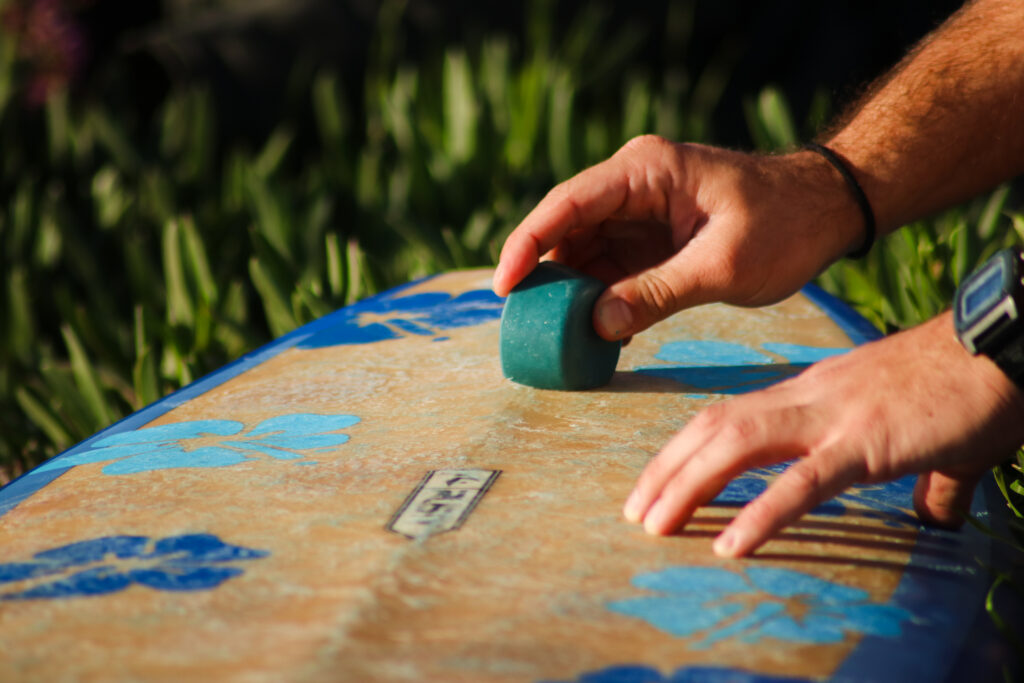
Surf wax is a traction coating applied to the deck of a surfboard to prevent slipping while riding waves, basically just like grip tape except perfect for water given how it functions. It creates grip by forming a slightly sticky, textured surface that helps your feet stay planted during paddling, pop-ups, and turns, all while repelling water away from the board due to its waxy, hydrophobic nature. Present day, surfboard wax has evolved to come in multiple different temperature ratings; ranging from a soft and sticky cold water surf wax, to an extra hard base coat surf wax to form bumps, to a warm water surf wax to act as a middle ground, however many surf waxes still haven’t grown out of their reliance on petroleum for performance.
What is Eco Surf Wax?
Eco surf wax essentially has the exact same function as surf wax, except it focuses on biodegradable, renewable ingredients instead of petroleum byproducts. Rather than starting as a crude oil byproduct, these formulas rely on natural waxes like beeswax or plant-based alternatives combined with organic resins and plant oils. The goal is to maintain strong grip and performance while avoiding petroleum ingredients and reducing long-term environmental impact. Because these ingredients naturally break down easier, they are less likely to persist in marine ecosystems than synthetic wax particles.
Spotting Eco-Friendly Surf Wax: 5 Key Elements
According to an article by Good Karma Projects, it is considered that six billion bars of surf wax are purchased annually worldwide, and that about 95 percent of them contain petroleum byproducts, with these kinds of stats also being backed by the American Surf Magazine. With the surf wax market being flooded with these kinds of products, it’s important to be able to distinguish between a conventional and an eco surf wax. A clean formula often wears it on its sleeve, and listed ingredients and brand transparency about methods and practices are good signs.
Many brands have been known to claim “biodegradable paraffin”, however they never specify how quickly the material actually breaks down, especially in marine environments. These brands may also refer to blended formulas that still contain paraffin, rather than being fully petroleum-free.
Renewable Wax Base: The Foundation Of An Eco Surf Wax
Why You Need A Paraffin Surf Wax Alternative
According to The Inertia, paraffin wax is refined, processed and often bleached to achieve its white appearance. This means your surf wax is hit with an assortment of carcinogenic chemicals before it’s even poured due to the paraffin purification process. To top it off, the end result is a petroleum-based product that doesn’t biodegrade, despite being used exclusively in the ocean. Paraffin surf wax alternatives like beeswax, soy wax, and other minimally processed plant waxes provide natural tack while avoiding toxic processes and remaining biodegradable.
So What Do We Use? Beeswax Surf Wax and Other Alternatives
Beeswax surf wax works well because it naturally provides strong, reliable grip while remaining smooth enough to apply evenly to your board. Beyond beeswax, other renewable wax alternatives can also perform well, like soy wax and carnauba wax. Brands like Levi’s Lax Wax include a 100% beeswax base and a strict no-petroleum policy, keeping ingredients natural while still maintaining performance.
Natural Surf Wax Ingredients: Plant Based Binding Oil
Coconut Oil
Plant-based binding oils like coconut oil are natural surf wax ingredients that help soften and balance the wax composition. Other types of plant oils and plant derived fats like olive oil, shea butter, and sunflower oil can do the trick as well. Compared to synthetic softeners, plant oils break down safer and easier in marine environments.
Non-Toxic Fragrances and Dyes: Does Colored Surf Wax Matter?
According to a Surf’s Up Sustainably Guide by 4ocean, many surfboard waxes use synthetic dyes and fragrances known to be toxic to enhance scent and color. While those sweet, fruity, coconut-y smells and clean, bright white bars might be super appealing, they might actually make up a big part of the problem when it comes to sustainability. However, you might not have to cut them out completely.
Non-Toxic Fragrances
Many conventional waxes use synthetic fragrance blends that only increase the number of harmful additives in a bar. Non-toxic alternatives rely on light, plant-derived scents or may avoid added fragrance altogether to keep the formula simple, make sure to look at your wax brand to see what they might say about how they source their fragrance!
Plain White Or Colored Surf Wax
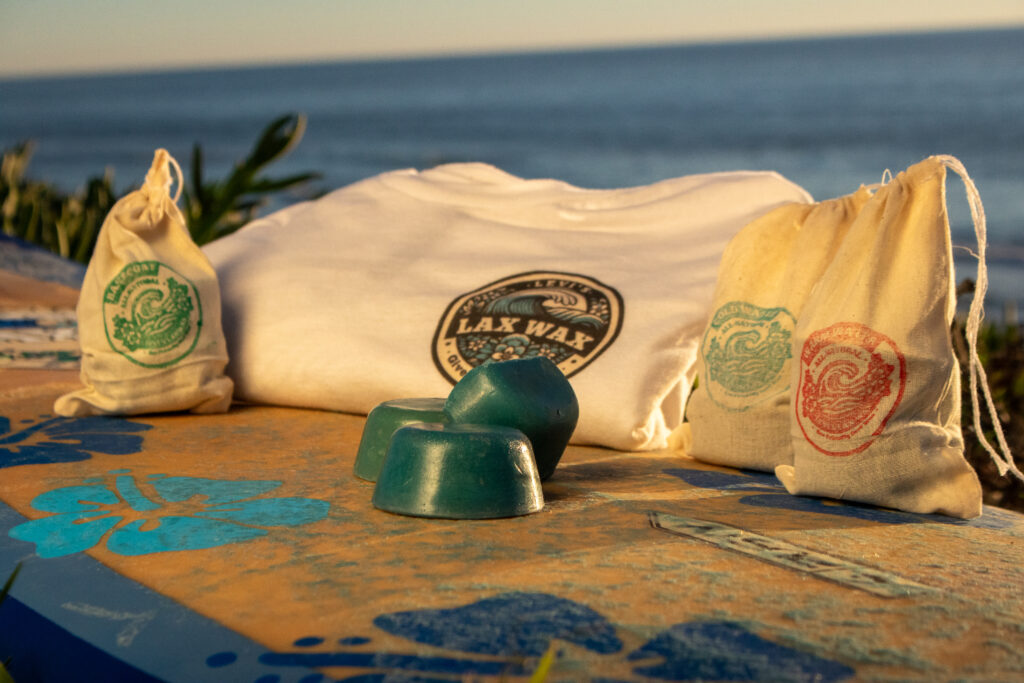
In many cases, those bright, colorful bars or bold, clean, white waxes come from extra processing or added artificial pigments. Simpler, non-toxic formulations reduce unnecessary chemical inputs into the ocean. Eco surf waxes can reproduce the same results, except with plant-based, phthalate free, or eco-friendly dyes! Lax Wax in particular makes blue bars using an eco dye.
Organic Surf Wax Essentials: Ocean Conscious Ingredients
Organic surf wax recipes are built around simple, naturally derived ingredients that come from, and work in harmony with, the environment. By default, organic surf wax avoids petroleum-based paraffin and unnecessary synthetic additives, since those ingredients don’t meet organic standards. Instead, these waxes will focus on natural materials and a cleaner overall formula. The key to a truly eco-friendly surf wax is transparency: a short, recognizable ingredient list centered on natural waxes, plant oils, and resins.
Minimal Packaging: Sustainable Practices
Sustainability extends beyond ingredients. Small items like wax wrappers add up over time, especially in coastal communities where plastic waste can easily make its way into the ocean. Choosing minimal, plastic-free packaging helps lower a product’s overall environmental footprint before it even reaches the water. Eco-friendly surf wax brands often prioritize recyclable or reusable packaging to reduce landfill and marine debris.

Switch To Eco-Friendly Surf Wax Today!
Surf wax may be a small part of your setup, but it’s something you use every session, and small choices add up. From petroleum derived ingredients to synthetic dyes, fragrances and additives, conventional wax can carry more environmental impact than most surfers realize.
Eco-friendly, organic surf wax alternatives prove that you don’t have to sacrifice grip or performance to make a better choice for the ocean. Levi’s Lax Wax is highly transparent about their use of natural ingredients like beeswax and coconut oil, and non-toxic dyes and fragrances to help mitigate the impact of traditional surfboard waxes on the environment, all while maintaining the same performance as big conventional surf wax brands on the market. If you’re curious to learn more about surf wax, check out our blog! Visit our site at levislaxwax.com to learn more about our very own, hand-poured eco-friendly surf wax!
Ready to see what eco-friendly surf wax can really do? Grab a bar to feel the performance for yourself! While you’re in the shop, get a T-shirt to help support the wave!
Try Lax Wax’s Eco-Friendly Surf Wax!