
Cold Water Surf Wax: Your Winter Surf Wax Guide

Cold water surf wax is designed to stay soft and grippy when ocean temperatures drop. As winter swells roll in and water cools, choosing the right formula can make the difference between steady footing and constant slipping.
Factors like ingredient blends, regional water temperatures, layering techniques, environmental impact, and personal surfing style can all influence which wax you should choose for the winter season that aligns with your style, values, and preferences.
This guide breaks down how cold water wax works, what to look for, and how to make it work for you.
Cold Water Surf Wax at a Glance: What’s The Difference?
| Wax Type | Water Temperature Range | Consistency | Best Use |
|---|---|---|---|
| Cold Water Surf Wax | ~65° and below | Extremely soft and malleable, extra sticky. | Staying live and sticky without becoming brittle and losing tack in harsh, cold waters. |
| Warm Water Surf Wax | ~65° to ~78° | Solid bar, lower tack but still some grab. Right in the middle of what you would find in cold and base. | Keeping hold while slamming turns in warm waters. Can be a more universal, all-around wax for experienced surfers. |
| Base Coat Surf Wax | ~80° and up if used as a top coat alone. | Extra dense. | Primarily used to create tall, dense bumps as a base for your top coats. Can be used as a top coat for more experienced surfers. |
Key Insights About Cold Water Surf Wax
- Surf wax formulas and brands vary in ingredients and additives, which directly affect grip, balance, and overall performance in cold conditions.
- Water temperature labels can be subjective, so numerical temperature ratings often provide a clearer guide when matching wax to local breaks.
- Top coat and base coat combinations influence how wax builds texture and traction, and some surfers prefer layering while others use a single temperature wax.
- Circular motions or cross hatches for your wax application technique can change how grip forms during winter sessions depending on your preferences.
- Environmental impact of your chosen surf wax is an important and often overlooked consideration, as many conventional formulas use petroleum-based, non-biodegradable ingredients that can accumulate in the ocean over time.
- Personal surfing style may matter more than temperature alone, as some surfers prioritize extra hold while others prefer less tack for mobility.
Understanding Surf Wax For Cold Water
Surf wax for cold water is formulated to remain soft and tacky in lower ocean temperatures. Surf wax is generally divided into three main types based on water temperature: cold water surf wax, warm water surf wax, and base coat surf wax. Some surf wax brands, like Sex Wax, might even have up to 5 different temperature formulations to fine tune your wax coat for any break!
Cold water surf wax is typically softer and tackier, warm water surf wax tends to be denser and less sticky, and base coat surf wax is mainly formulated to build bumps on your board to act as a base layer for the aforementioned wax top coats. As the chilly winter ocean water sets in, the wax coat on your board naturally becomes firmer, which can become slick if the formula is not designed for colder conditions. Cold water blends typically use ingredient ratios that help maintain texture and traction when standard waxes would brittle up.
Understanding how temperature affects the behavior of the wax on your board makes it easier to choose a wax that performs consistently during winter sessions.
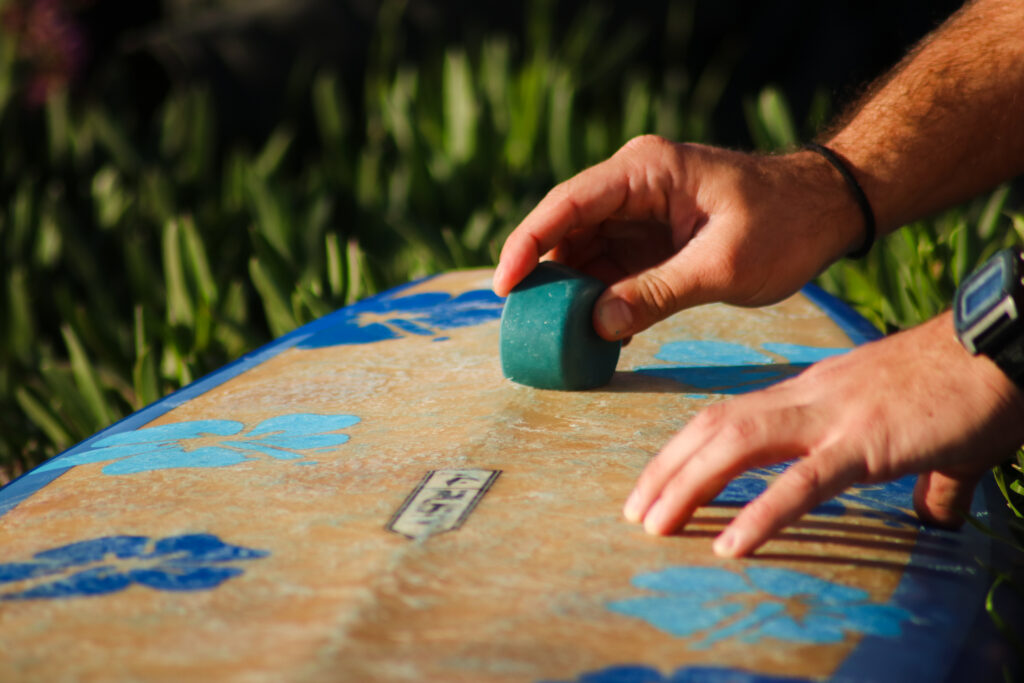
What To Know When Choosing Your Cold Water Surf Wax
Finding your favorite cold water surf wax for the winter can come with some nuance, but after reading through the following guidelines, you’ll find the perfect wax your surf style can lean on in no time!
Surf Wax Formulas and Brands
Surf wax formulas and brands vary in ingredient composition, which directly affects grip in cold conditions. Knowing the natural behavior of a type of wax helps determine whether it will match your surfing style in frigid conditions.
Certain brands include extra additives that improve stickiness so you can stay strapped to your board, Like Fu Wax or Sticky Bumps, while others stay well-balanced and focus on getting the job done across any surfing type, like Sex Wax. Brands like Levi’s Lax Wax aim to match all types of surfing in any temperature while replacing harmful ingredients with eco-friendly substitutes!
The best way to get accustomed to a surfboard wax formula or brand is to try them out and see what sticks for you. To learn more about making decisions on types of surf wax brands, check out our blog about choosing surf wax!
Differing Water Temperatures Between Waxes
Water temperature labels on waxes can be subjective to what cold really is. All waxes have their own unique formulas, with different ingredients, made by different people with their own perceptions of cold.
In Miami, water temperatures in the low 60s may feel unusually chilly, while in much of California that same temperature is common. As a result, local wax with labeled water temperatures in these regions might mean different things in other regions.
Referring to surfboard waxes that have water temperature labels with numerical temperature ratings, like 56°-66°, and matching them to your local break can help you choose the best wax for you.
Top Coat and Base Coat Compatibility
Your top coat sits above your base layer and creates the textured bumps that improve grip underfoot. The interaction between the basecoat and top coat also affects overall performance.
Some surfers might believe that all you need is a single wax temperature to stick to through and through, while others believe a combination of all types of waxes together on your board can prove most effective, and everything in between.
A compatible combination for you should allow the wax to build small, raised beads all along your board to increase friction.
Circular Motions Or Cross Hatches?
Circular motions and cross hatches are two common techniques for applying surf wax, and each affects traction in their own ways.
Circular motions create small, raised bumps scattered across the board, while cross hatches form a uniform, intersecting line pattern.
Trying both techniques with different kinds of waxes can show which pattern offers the best grip in cold water for you and which waxes don’t support your preferred pattern as well during winter sessions.
Environmental Impact
Environmental impact is often overlooked when choosing surf wax, but it plays an important role in the long-term health of the ocean.
Conventional surf wax often contains petroleum-derived ingredients that do not biodegrade and can accumulate in the ocean as it wears off with use. Over time, these wax flakes can contribute to microplastic pollution and may negatively affect coral reefs and other sensitive marine ecosystems.
Surfers who care about ocean health may prefer formulas that use sustainable ingredients instead of paraffin and heavy petrochemicals. Choosing an eco-friendly surf wax that emphasizes biodegradability helps reduce environmental impact while still providing the traction needed for performance. Lax Wax in particular makes a wax bar focused on cold water performance without petroleum or microplastic additives!
Your Surfing Style
Your surfing style plays a big role in the type of wax you choose and how you apply it.
Cold water surf wax is obviously formulated to perform the most consistent in colder conditions, however the extra stick might throw off some surfer’s groove. More experienced surfers might use warm water surf waxes even in colder conditions for how it feels on their wetsuit or to free up their cross-step due to its less tacky behavior. Many surfers even use base coat surf waxes by themselves year-round purely as preference. However, warm water wax may not provide the grip you’re looking for when ocean temperatures drop, so it’s best to stick to a cold water wax if you’re less experienced.
Matching your wax type to what feels the best for your style to flourish can be even more important than water temperature to those with lots of experience.
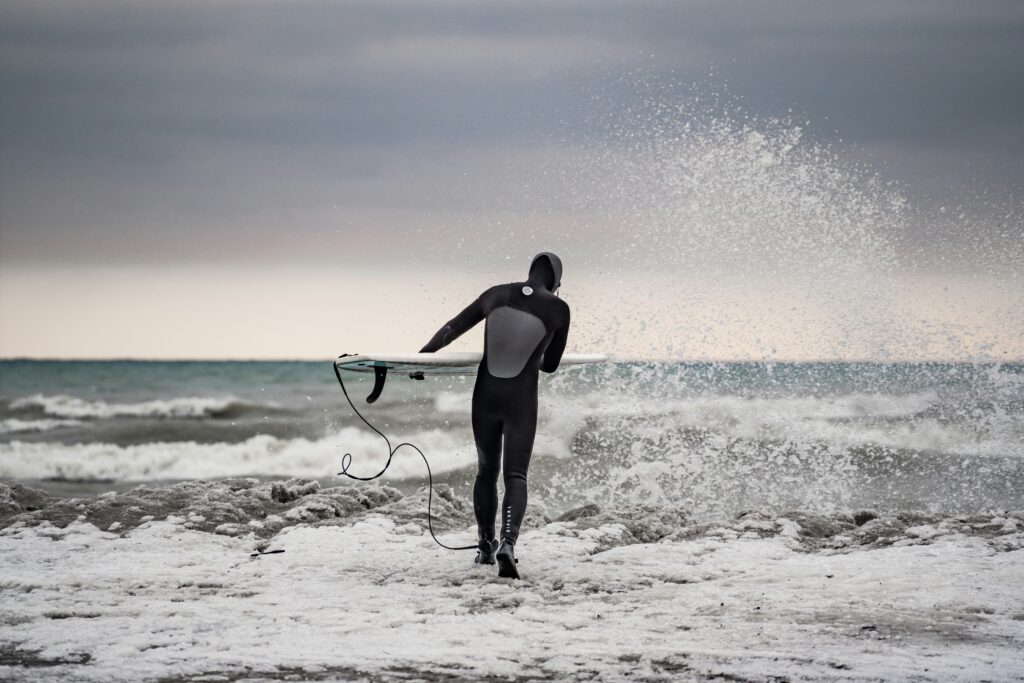
So What’s The Best Cold Water Surf Wax?
The best cold water surf wax depends on more than just what the label says. Water conditions, ingredient composition, water temperature subjectivity, application technique, personal surfing style, and even environmental impact all influence what kind of wax you’ll choose for your own style and preferences. Taking all of these factors into account will help you find the perfect synergy between you and a wax type.
For surfers looking to align performance with sustainability, options made without paraffin and formulated with sustainable ingredients offer an alternative worth considering. Levi’s Lax Wax focuses on cold water performance while maintaining strict zero-paraffin practices and ingredient transparency. If you’re curious about how eco-friendly surf wax compares, explore our in-depth guide on eco-friendly surf wax or visit levislaxwax.com to learn more about our brand!
Try Lax Wax’s Eco Friendly Surf Wax!
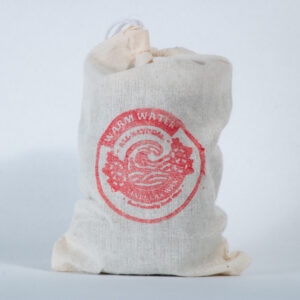
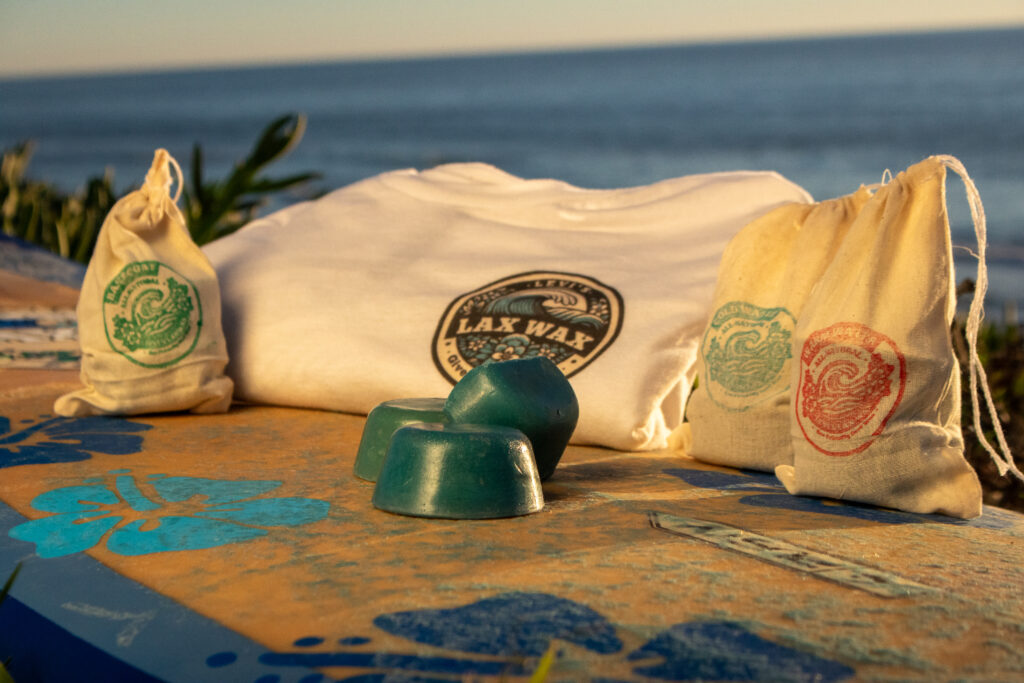
Looking to see what eco-friendly surf wax can do? Grab a Lax Wax bar here! While you’re in the shop, grab a T-shirt to support the wave!
Cold Water Surf Wax FAQ’s
Have questions about cold water surf wax? Find answers to the most common questions below!
Cold water surf wax is formulated to remain soft and tacky in lower ocean temperatures, helping maintain grip when standard waxes would harden. Warm water surf wax is denser and less sticky, designed to hold its structure in higher temperatures without becoming too soft. Base coat is different from both, as it’s primarily used to build bumps that create a foundation for additional wax layers.
Some surfers do use warm water or base coat surf wax as their preferred top coat in colder conditions, often because they prefer its less tacky feel underfoot or against their wetsuit. However, these waxes are firmer and may not provide the grip you’re looking for when ocean temperatures drop. Whether it works for you often comes down to personal style and how much traction you prefer during winter sessions.
Cold water surf wax is softer and stickier by design, which helps it perform in chilly water. In warmer conditions, that same formula that helps it work in cold water can cause it to mush out completely in warm water, losing the structure of its bumps and even sliding off your board. It’s best to use waxes that are rated for warm water and up for surfing in warm ocean water so your wax can maintain its structure throughout your session.
Cold water surf wax is generally intended for significantly lower ocean temperatures, like for surfing in the Pacific Ocean in the winter for example. Since temperature labels can be subjective between brands and regions, finding a wax with a numerical temperature rating and matching it to your local water conditions is the most reliable approach. Make sure your wax matches the water of the local break you’re talking about! Some cold water waxes can be meant for chilly water, and some can be for serious arctic cold.