
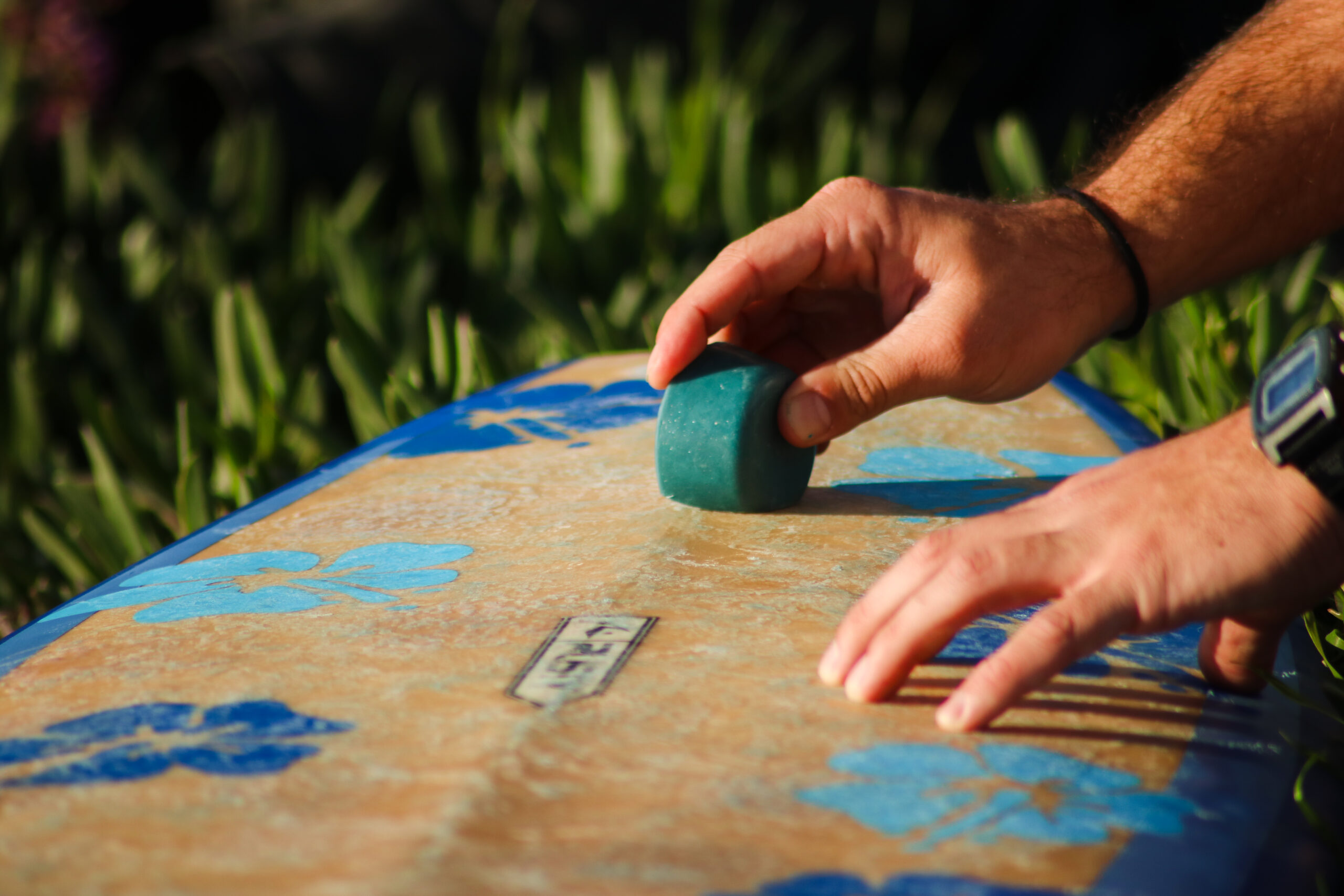
Grab the wrong bar and you’ll know by your second wave. Cold water wax on a hot August afternoon turns to grease under your feet. Warm water wax in winter goes hard and slick, and your back foot starts sliding on every turn.
Surf wax types exist to fix exactly that. Each one is built for a range of water temperatures, and matching it to your break matters more than the name on the label.
This guide covers the main surf wax types by water temperature, what to look for in a bar, and how the big brands compare on price, grip, and ingredients.
Surf Wax At A Glance
Prices are per bar on each brand’s own site and vary by retailer and pack size.
| Brand | Type | Price |
|---|---|---|
| Mr. Zog’s Sex Wax | Traditional | $2.40 per bar |
| Sticky Bumps | Traditional | $3.00 per bar (6-pack) |
| Sister Betsy’s Surf Wax | Traditional | $4.15 per bar (6-pack) |
| Fu Wax | Traditional | $6.00 per bar |
| Levi’s Lax Wax | 100% beeswax base | $3.50 per bar (6-pack) |
Table of Contents
- What Should You Look For In Surfboard Wax?
- Surf Wax Types By Water Temperature
- Surf Wax Brands: A Closer Look
- So Which Surf Wax Type Should You Use?
- Surf Wax FAQs
What Should You Look For In Surfboard Wax?
The right wax comes down to where you surf, how you surf, and what you’re putting in the water. Check these four things before you pick a bar.
Water Temperature For Your Break
Every wax is made for a temperature range. Too soft for the water and it mushes out and slides off. Too hard and it goes slick under your feet.
Cold water wax is the softest and stickiest, so it stays tacky when the water drops. Warm water wax is harder, so it holds its shape in summer heat. Base coat is the hardest of all and goes underneath your top coat to build bumps.
Some guides get this backwards and say cold water calls for harder wax. It doesn’t. Hard wax in cold water just turns slick.
Temperature labels also mean different things in different places. Low 60s is normal for much of the year in Southern California and unheard of in Florida. A number on the label tells you more than the word “cold,” so check your break’s water temp first and pick a wax rated for it.
Grip and Stickiness
Everyone is obsessed with grip. After all, it’s the whole job of surf wax.
Grip comes from texture. A good wax builds small, raised bumps that your feet lock into, the way grip tape works on a skateboard. A smooth, flat layer gives you almost nothing to hold onto.
How much tack you want depends on how you ride. Shortboarders stomping hard turns usually want more. Longboarders cross-stepping to the nose often don’t worry about it so their feet can move. Just know that super sticky wax can be rough on your wetsuit, grabbing at the neoprene and tearing it over time.
Durability and Longevity
A quality wax builds dense bumps that hold up through a long session and a hot afternoon. That way you’re freshening up your wax, not starting over.
The easiest way to get there is a base coat under your top coat, then a light coat of top wax before each session. Bumps get taller over time, and a full wax job can last about six months before you need to scrape it and start fresh.
Eco Ingredients
Most surf wax is built on paraffin, a petroleum byproduct. A 2024 compositional analysis of surfboard waxes found conventional samples were dominated by petroleum-derived paraffin and similar waxes, which are slow to break down in the ocean.
Eco waxes swap that base for renewable materials like beeswax. Read past the label, though. “Eco” has no regulated definition, and some brands call paraffin “biodegradable” without saying how long it takes to break down in seawater. A brand that tells you exactly what its base is made of is a good sign. For more on this, see our guide on whether surf wax is bad for the ocean.
Surf Wax Types By Water Temperature
Surf wax comes in two layers: a base coat that builds the bumps, and a top coat matched to the water temperature. Here’s how the main types break down, using our own ratings.
| Type | Water Temp | Feel | Best For |
|---|---|---|---|
| Base Coat | Under any top coat; alone above 78°F (26°C) | Hardest, extra dense | Building long-lasting bumps; tropical water on its own |
| Warm Water | 68–78°F (20–26°C) | Harder top coat that holds its shape | Summer sessions (June–October in SoCal) and tropical trips |
| Cool Water | 60–72°F (16–22°C) | Soft and sticky, balanced | Fall and spring in SoCal; year-round at cooler breaks |
| Cold Water | 65°F (18°C) and below | Softest and stickiest | Winter sessions (November–May in SoCal) and dawn patrol |
A few things to know when you read a chart like this:
- Ranges differ by brand. Every company sets its own cutoffs, so compare the numbers, not just the names. Some brands sell a separate tropical wax for very warm water; base coat covers that range for us.
- The ranges overlap on purpose. Water temp changes through the day and with the sun. In an overlap, go softer if you run cold or surf early, and harder if the sun is out and the water’s warming up.
- Base coat isn’t required, but it helps. You can get by with only a top coat, but a base layer makes your bumps taller, keeps them longer, and means fewer full rewaxes.
Surf Wax Brands: A Closer Look
Once you know which type you need, brand comes down to feel, price, and what’s in the bar. Here’s how the big names compare.
Sex Wax
What To Expect
Mr. Zog’s Sex Wax has been around since 1972 and is sold just about everywhere, from surf shops to beach gas stations. It’s consistent and predictable, and the Quick Humps line comes in grades from soft to hard for different water temps.
Things To Consider
Sex Wax says on its own site that it uses paraffin as its base. It works well, but if you’re trying to keep petroleum off your board, it’s not built for that.
Verdict
The dependable classic and one of the cheapest bars per unit. A safe pick if price and availability matter most.
Sticky Bumps
What To Expect
Sticky Bumps is the other legacy name most surfers grew up with. It’s known for strong grip and comes in several tack levels, so you can go milder or stickier depending on how you ride.
Things To Consider
Sticky Bumps lists its ingredients on the box, including natural mineral waxes, a proprietary tackifier blend, and meadowfoam seed wax. That’s more disclosure than many brands give. It still follows a fairly traditional formula and costs a bit more than Sex Wax.
Verdict
A strong all-rounder with more tack options than most. Good for surfers who want to fine-tune grip.
Sister Betsy’s Surf Wax
What To Expect
Sister Betsy’s is a newer brand with ’90s-inspired branding and creative scents. It brings real personality to a category that hasn’t changed much in decades.
Things To Consider
It’s one of the pricier bars on this list per unit, and as a newer brand, it’s not on every surf shop counter yet. Their sample kit is an easy way to try a few scents before buying a full pack.
Verdict
A fun pick if you want a wax with some personality and a scent you’ll actually notice.
Fu Wax
What To Expect
Fu Wax is known for serious stickiness. It’s long been popular in Brazil, has a following among competitive surfers, and has been picking up fans elsewhere.
Things To Consider
It’s the most expensive bar on this list, and that much tack can be more than you need, especially if you ride a longboard and like to move your feet.
Verdict
Top-tier grip at a premium price. Worth it if maximum traction is the priority.
Levi’s Lax Wax
Full disclosure: this one’s ours, so weigh it with that in mind.
What To Expect
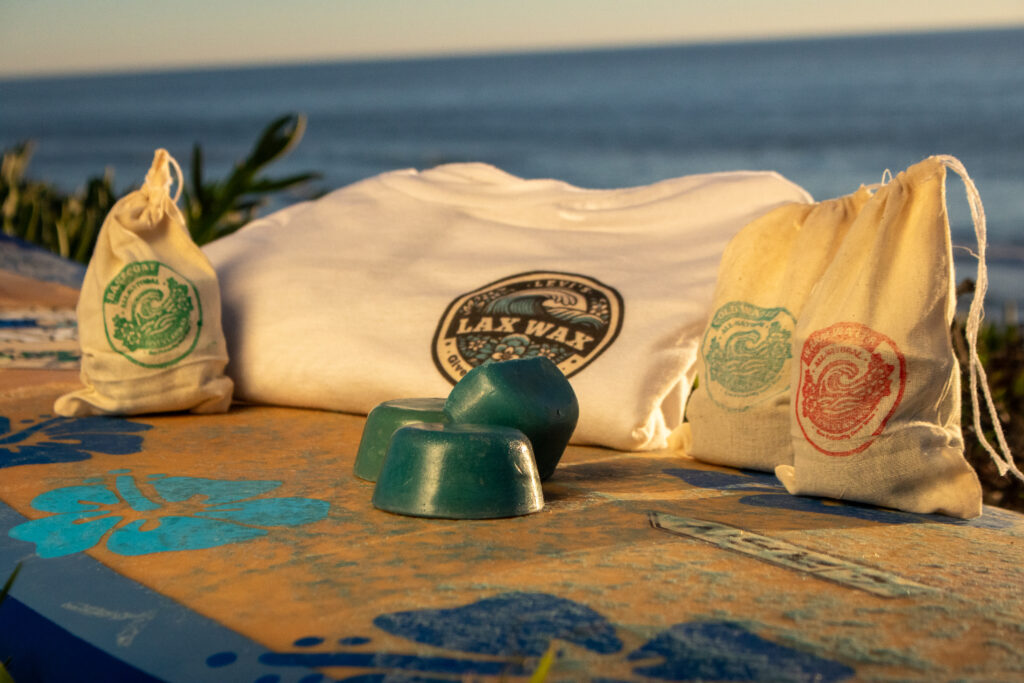
Lax Wax is hand-poured in small batches in San Diego. Our wax starts with raw beeswax from local San Diego County beekeepers at Cool Valley Honey, harvested straight from the hive and never bleached or heavily processed. That beeswax makes up the entire base of every bar, with no paraffin, soy, or other waxes, plus a few thoughtfully selected ingredients that help it perform.
We make all four types from the chart above: base coat, warm, cool, and cold water. They’re made to grip like the classic brands, just without the petroleum.
Things To Consider
We’re a small, local brand, so you’ll find us online and at San Diego markets rather than on every surf shop counter. A single bar is $5, and a 6-pack works out to $3.50 per bar, which puts us in the middle of this list on price.
Verdict
A petroleum-free option with a 100% beeswax base and a short, local supply chain. If you want to know where your wax comes from, it’s worth a try.
So What’s The Best Surf Wax Type?
Your surf wax type should start with the water. Check your break’s temperature and pick the type rated for it. Then choose a brand based on the grip you like, the price you’re comfortable with, and how much you care about what’s in the bar, and give it a try.
If you surf Southern California like we do at Lax Wax, cool water wax covers most of the year, with warm water wax for summer and cold water wax for winter. If you’re headed somewhere tropical, a harder wax keeps you from sliding around in the heat. Surfing through winter? Our cold water surf wax guide goes deeper.
Not sure yet? Grab a single bar of the type that matches your water and see how it feels on your next session.
Surf Wax FAQ’s
Have questions about surf wax? Find answers to the most common questions about surf wax in general below!